
New York County Arrest Log Sources
Nobody at NYPD posts a full seven-day list of everyone arrested in New York County. The NYPD newsroom releases only selected events. An entry may include a date, a place, an alleged offense, a narrative, or an agency image. None of it is a full booking card. The Manhattan District Attorney does the same, announcing chosen prosecutions and outcomes rather than each arrest.
For breadth, NYPD Open Data works better. Its historic and year-to-date arrest datasets capture borough incidents in coded fields, but on a slow clock. The historic set updates annually. The year-to-date set stops at the last full quarter. Neither is a live custody roster, and weekly citywide statistics are aggregate counts that never name who was arrested.
Read Manhattan Arrest Reports Carefully
Start with the date and the agency. Then test each report against the next official stage. A press release may carry its publication date rather than the date of arrest. A DA release may cover an old indictment or plea. Local reporting helps discovery. But police, prosecutor, and court records control their own facts.
- Search the NYPD press archive by date and read the release for precinct, place, and charge context.
- Review Manhattan DA press releases for selected New York County case developments.
- Use NYPD year-to-date arrest data for broader incident patterns, remembering that it lags and lacks a public name-and-photo field.
- Check WebCriminal or the court clerk for the pending case, filed charge, court part, and later disposition when public.
- Use DOC's named lookup only to test current city custody. It is not an archive of weekly arrests.
For same-day custody, the daily arrest report page explains the DOC entry delay and fallback. The multi-day approach here leans on dated reports. It also leans on changing case stages. It reaches past the first news cycle.
The official year-to-date dataset page shows the data product behind broader arrest analysis.
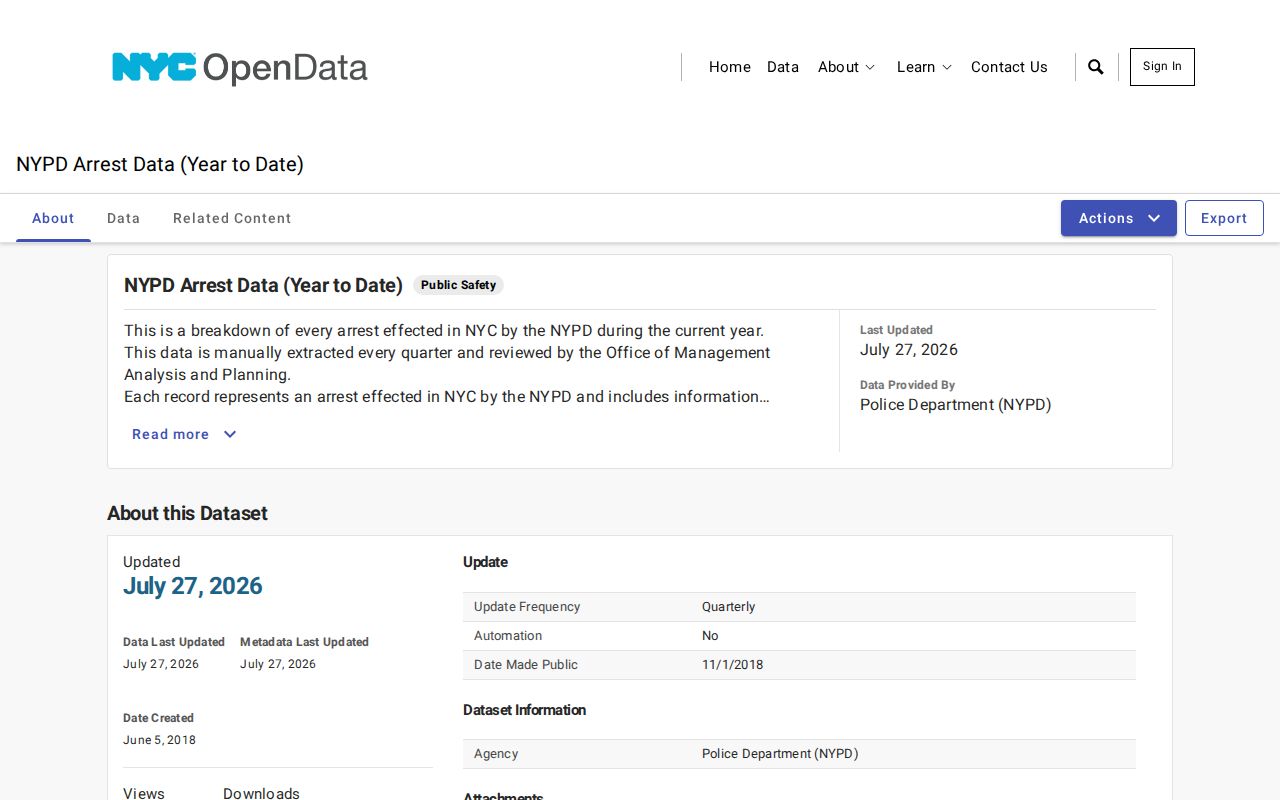
This is delayed incident data, not a weekly list of named people or a live custody screen.
New York Arrest Log Fields
No single entry format exists. Each source sets its own fields, meanings, and time frames, so keep narrative material, standardized data, and current-custody results separate.
| Field or source | Supported interpretation |
|---|---|
| Press and incident dates | May differ. Read the release to identify when the event allegedly occurred. |
| Location and precinct | May identify a Manhattan incident area, not a jail location. |
| Alleged offense or law code | An initial description that can change after prosecutor and court review. |
| ARREST_KEY and borough | Open Data identifiers and geography; M denotes Manhattan. |
| Name | May appear in selected coverage, but is not a field in the described Open Data sets. |
| Photo | Images vary by story. No routine official booking-photo blotter was found. |
| Disposition | Must be checked through the court, not inferred from an arrest report. |
Charge information varies by source. A newsroom entry, a dataset code, and a court docket each describe the same arrest differently.
Weekend Manhattan Arrest Coverage
NYPD publishes no rule promising a complete weekend list on Monday. No fixed holiday catch-up cycle exists either. Press officers can post selected cases on any day they choose. Newsrooms pick their own stories. A burst of Monday articles may cover weekend arrests. It may also cover older investigations or court action rather than a fresh surge of bookings.
Keep several dates apart: incident, arrest, publication, arraignment, and disposition. That matters when a DA announcement trails the arrest by weeks or months. Custody questions go to DOC. For the alleged event, use the police record. For the final result, use the court file.
The official Manhattan DA press archive offers selected county case announcements.
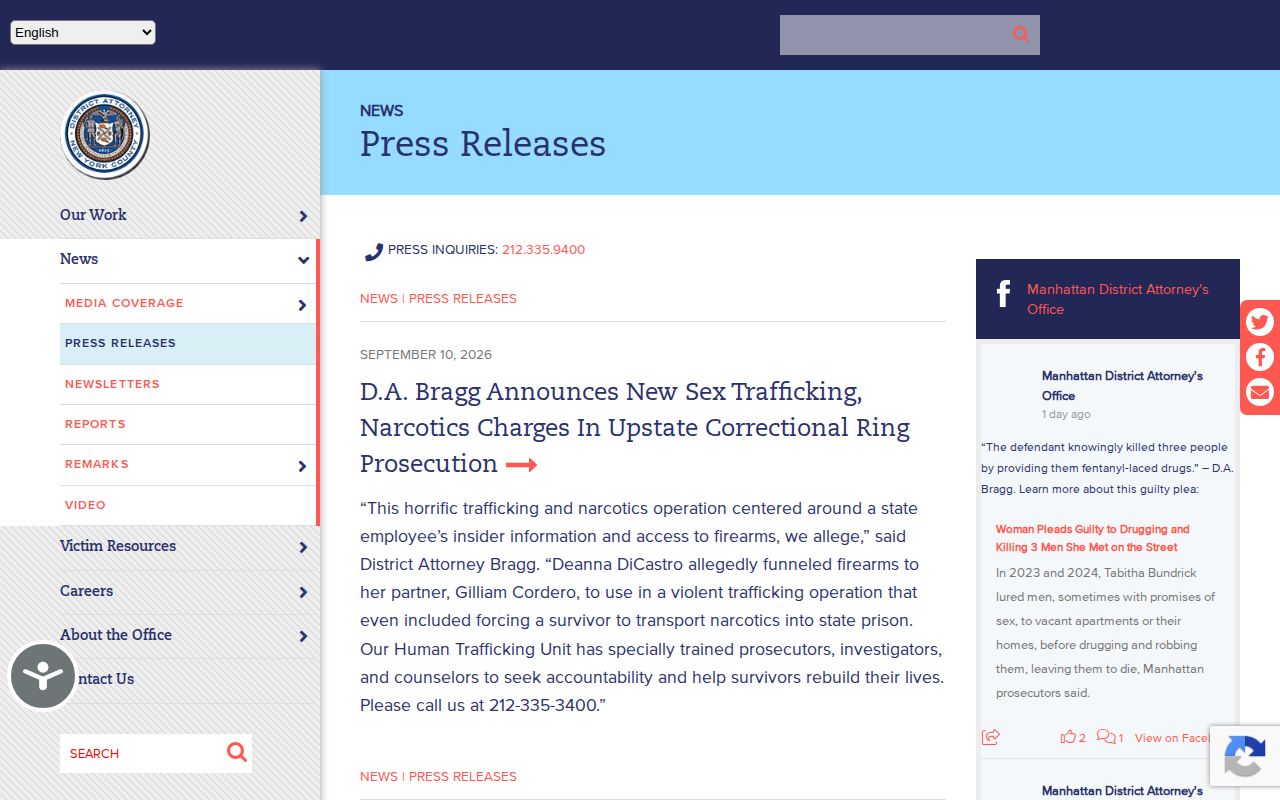
The archive adds prosecution context to chosen cases. It is not a complete arrest log. Note: No official source supports the claim that weekend or holiday bookings post in a fixed batch at any set time.
New York Arrest Archives and FOIL
The newsroom is curated, not exhaustive. DOC lookup serves people currently in custody. Released people have no fixed online window there. For an older arrest report or commitment record, file a targeted Freedom of Information Law request with NYPD or DOC. Include full name, arrest date, precinct, NYSID, Book & Case Number, court, and a narrow date range where known.
NYPD retention depends on record class and final disposition. No single online lifespan applies. A record may sit unposted, be withheld under an exemption, or end up sealed. When a search cannot locate something, ask the records access officer to identify the retention disposition.
Old prison records sit at the State Archives. Those collections may require a facility, an admission date, or an inmate ID. They do not archive every recent Manhattan arrest. The state incarceration records schedule lists retention categories without promising that each NYC booking photo stays public.
The State Archives inmate-records research tip shows why historical correctional research needs more than a name. That path leads to state correctional records. It is not a current New York County blotter.
Manhattan Arrest News Is Selective
Local reporting widens the net but stays secondary. NY1 Manhattan and Gothamist cover citywide and borough events. Patch's Midtown and Hell's Kitchen police-and-fire section goes neighborhood-deep. The Daily News crime section and the New York Post metro section pick their own stories, and none promises every New York County arrest.
| Source | Role and limit |
|---|---|
| NYPD newsroom | Official selected releases, not an exhaustive booking log. |
| Manhattan District Attorney | Official selected case announcements, including later stages. |
| NY1 Manhattan | Secondary borough news with no fixed booking cadence. |
| Gothamist | Secondary reporting that requires official verification. |
| Patch Midtown | Neighborhood coverage, not all Manhattan. |
Unofficial arrest aggregators look even thinner for Manhattan. Mugshots.com keeps a New York City page. Its local entries sit stale rather than current. Busted Newspaper, RecentlyBooked, Arrests.org, and Mugshots.zone list no county section at all. Those sites run stale, incomplete, and detached from court outcomes. So anyone tracking Manhattan recent arrests should let official records lead the way.
New York Arrest Trends Are Aggregate
NYPD weekly CompStat and citywide statistics answer a different question than a person-level blotter. They count. The Open Data platform breaks activity down by date, offense, borough, precinct, jurisdiction, demographic codes, and geography. Yet its public fields skip names and booking photos entirely. These products show how arrest activity across Manhattan shifts over time. They do not show where one person sits tonight. For the long view, the historic NYPD arrest dataset is the official source. It stretches back years for anyone studying borough patterns.
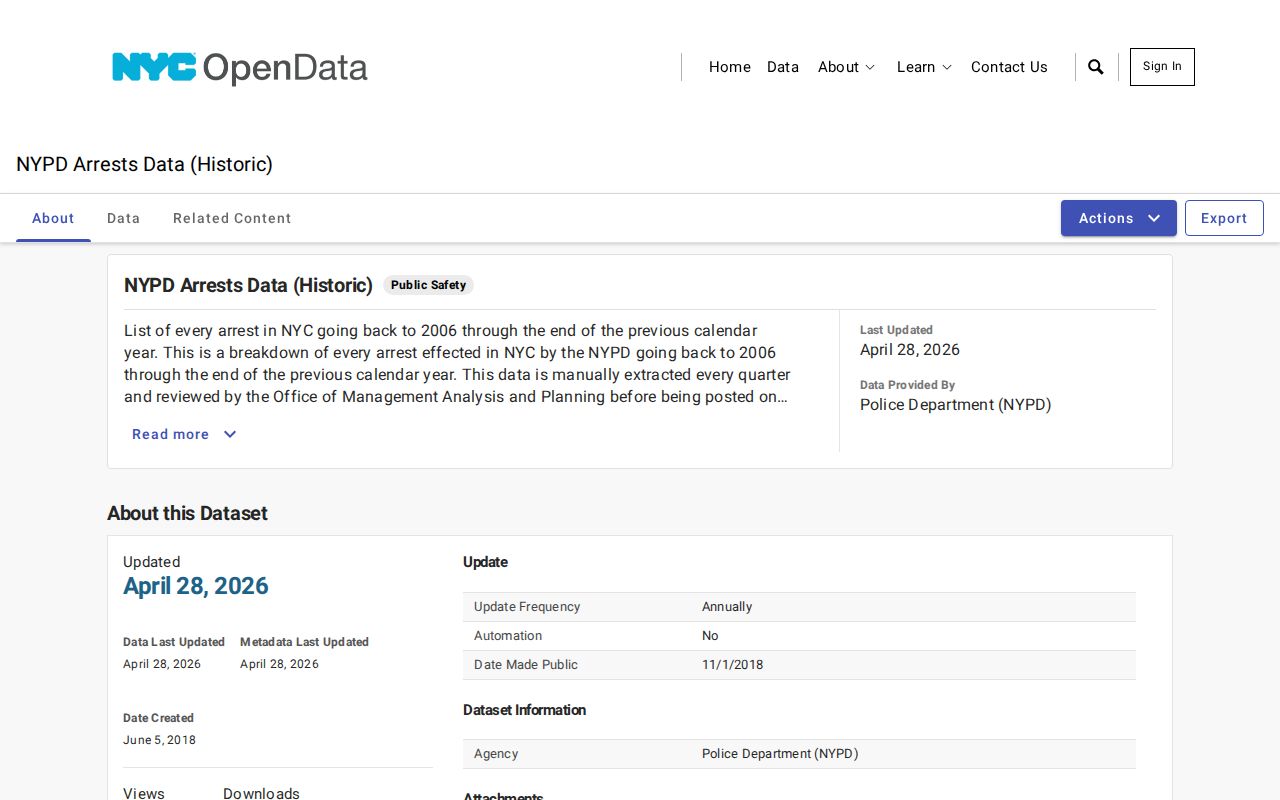
That dataset page shows why trend analysis and individual custody checks stay separate jobs. Numbers describe the crowd. They cannot answer for one person. So return to the court, DOC, or records-request channel for a person-level result. Pull the disposition for the final answer. A statistic cannot establish what happened in a single prosecution. A press story cannot establish a full weekly count either. Quarterly and annual updates still earn their keep when the question concerns patterns rather than a name. Filter the dataset by Manhattan borough, date range, precinct, and offense fields. Keep the publication lag in mind when drawing conclusions. Never pair an aggregate row with a news photograph. The coded demographic fields identify no one. The soundest account names the period covered, the agency behind the numbers. It also explains why a later court record may tell a different story about any single arrest.